
I recently watched a Netflix series with the title of Graveyard. Berk, the criminologist, explained Locard’s Transfer Principle and how it applied to the case that the Turkish detectives were trying to solve. In forensics, whenever two surfaces come into contact, there is a mutual transfer of material. This can apply to human and non-human interactions. While this is a foundational principle of forensics, it can also apply to the natural world.
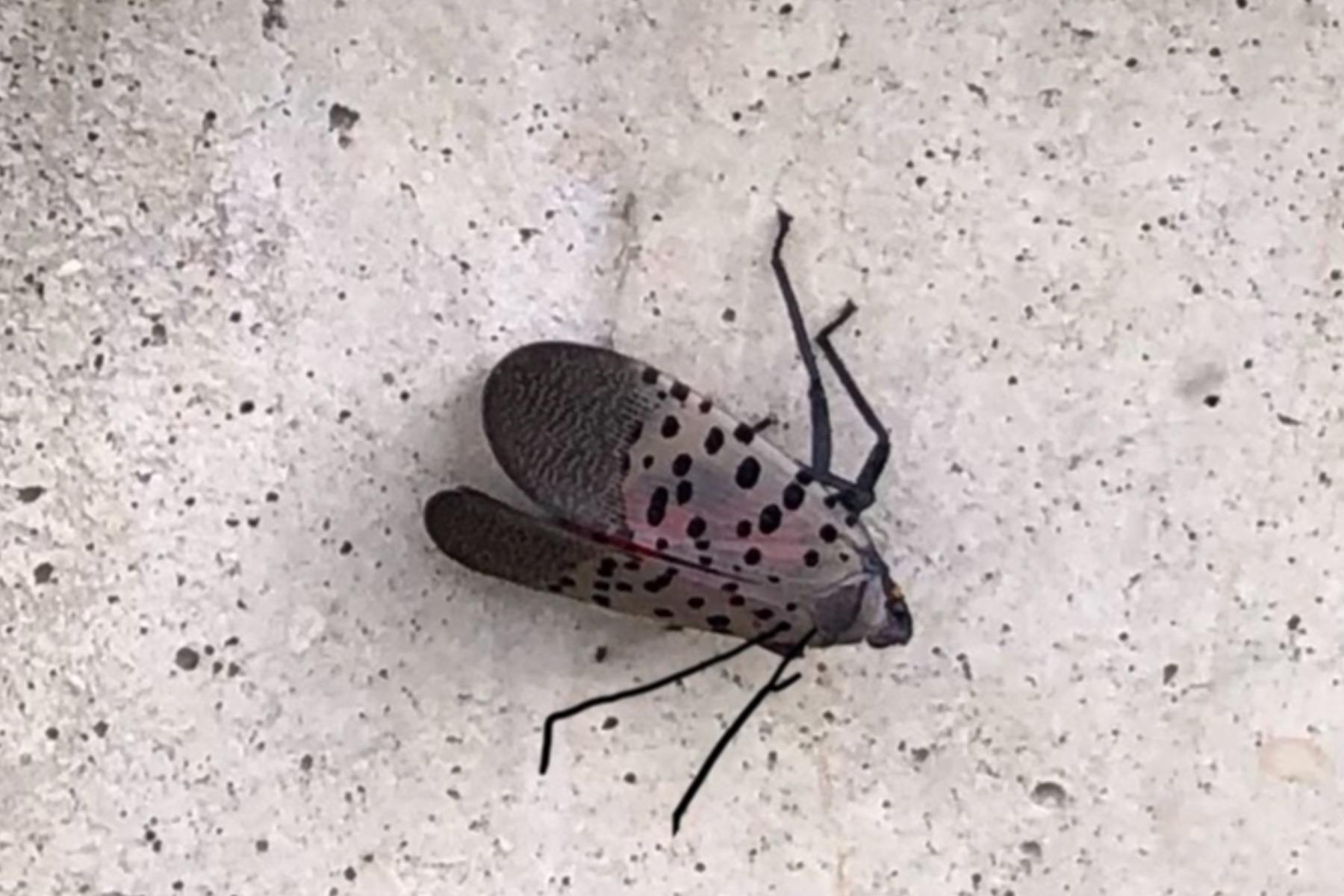
While in Massachusetts in August, my attention was drawn to a brightly colored insect with polka dot forewings and red, black and white hindwings. I was curious about this insect since I had never seen it before.
After doing research, I discovered that it is called a Spotted Lanternfly. It is a highly invasive planthopper, native to Asia, that was first detected in Pennsylvania in 2014. It is thought that an egg mass inadvertently made contact with soil within a shipment of poinsettias brought to the United States.
Since 2022 the Spotted Lanternfly has been considered an invasive species in the U.S. due to the extensive damage that it does to a variety of plants. They have been observed in 19 states in the midwestern and northeastern U.S.
Spotted Lanternflies have no positive economic or monetary value and it costs the U.S. agricultural economy tens of millions of dollars annually. Their diet includes grapevines, maple trees, black walnut, birch, willow, and other trees. The only known value of these insects is that they help to weaken the invasive tree-of-heaven which is their favorite food. The people of China don’t think of Spotted Lanternflies as pests since they are kept naturally in balance by the native Asian predators that live alongside them.
There are many suggestions on how to stop the spread of invasive species like the Spotted Lanternfly. One effective way is through reducing contact. Make it your practice to use the “Check, Clean, Dry” Protocol when you travel: wash the undercarriage and grille of your vehicle, clean outdoor furniture, and remove trapped seeds, mud, organisms and insects from your shoes before changing locations.
For more information on the Spotted Lanternfly, or to report a sighting, go to Overview: The Spotted Lanternfly - The Spotted Lanternfly Project.
As God’s stewards of creation, we can care for the earth by being aware of the impact of Locard’s Transfer Principle wherever we go.
Mary Kaeding