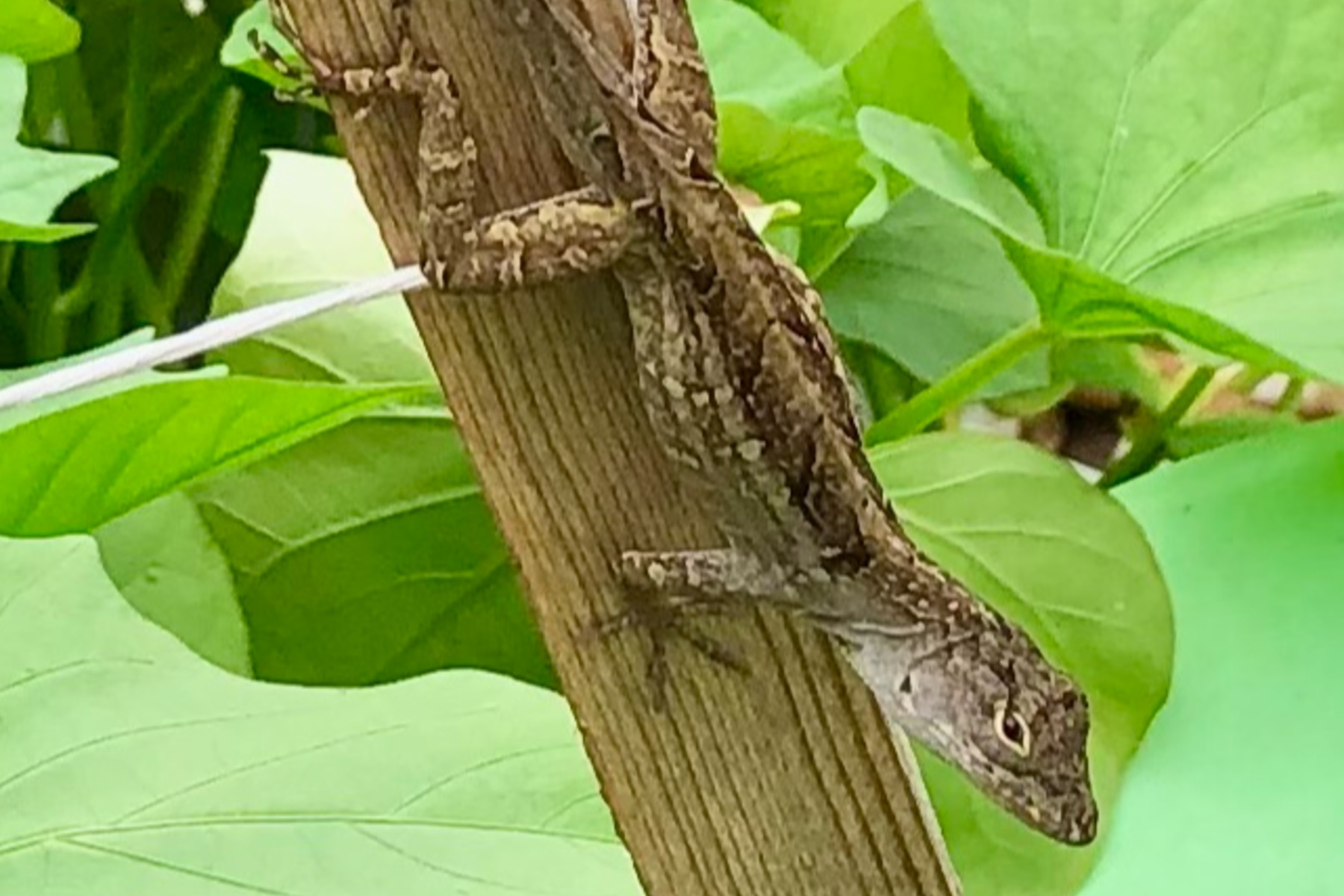

Like many visitors to Florida, I was fascinated by the small brown lizards that crossed my path while I walked from my hotel to my rental car on my way to Disney World. The only lizard that I saw when I lived in Massachusetts was the one that my daughter had as a pet.
When I moved to Central Florida, I no longer got so excited about lizards. I realized that they were everywhere: in my yard, on my lanai, and sometimes even inside my house.
The most common lizards in Central Florida are called Brown Anoles. They were originally from Cuba and the Bahamas but are now found throughout Florida. They were accidentally brought to the United States as eggs in potted imported plants in the 1970’s.
Brown Anoles are now considered an invasive species in Florida. Although they only eat insects like flies, gnats, crickets and spiders, and do not damage plants, they are considered to be invasive because they have negatively affected similar native lizards. Green Anoles have been driven up into the treetops by the Brown Anoles who prefer ground cover and garden areas.
When I became a fulltime resident of Florida, I had a hard time adjusting to the lizards that kept sneaking onto my lanai and leaving their droppings for me to clean up. After reading about how to manage them, I began to find that living with them around me wasn’t so bad.
I learned to keep the lanai clean of crumbs to cut off their source of food, and I made sure the plants on my lanai were free of leaf litter, so the lizards weren’t interested in laying their eggs. I began to draw them into the raised bed garden on my patio by leaving the dense plant foliage alone and throwing a few food scraps into my garden. I also made them a little house out of a coconut shell as a place to hide. This seems to keep them happy and (mostly) out of my lanai. One time, I even saw a Green Anole sharing their garden space.
Sometimes we focus on destroying what we think of as “invasive.” Instead, we should remember that often creatures like the Brown Anole were accidentally brought into an unfamiliar environment by humans and they are only trying to adapt. As God’s stewards of creation, we should celebrate their resilience and persistence and try to find ways to live with them.
Mary Kaeding